

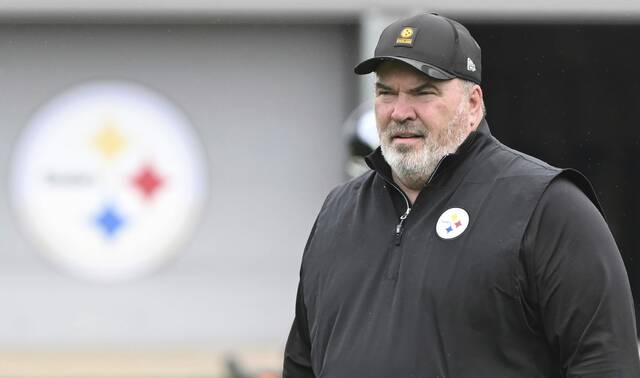
The Pittsburgh Steelers enter their Week 9 bye with a 6-2 record, four consecutive victories and the AFC North lead. Their recent performances have shown meaningful progress, particularly in the running game and defensive execution, although several offensive weaknesses remain.
Mike McCarthy’s team opened with wins over Atlanta and Cincinnati, interrupted by losses to New England and Cleveland. Since then, victories against Indianapolis, Tampa Bay, New Orleans and Cleveland again have strengthened Pittsburgh’s position. Third-down consistency, pass protection and red-zone finishing still need attention, while special teams and secondary depth present additional concerns.
Third-Down Struggles Are Holding Back the Offense
Pittsburgh’s third-down problems have become one of its biggest offensive frustrations. Through eight games, Pittsburgh has converted 39 of 103 third-down opportunities, a 37.9% success rate. Although that represents an improvement from their early-season numbers, inconsistent execution continues to interrupt offensive momentum.
The issue becomes clearer when comparing Pittsburgh Steelers game lines with the team’s situational performance. Pittsburgh has shown it can sustain drives, but its efficiency varies considerably between matchups. That disconnect reflects questionable execution rather than an inability to move the football.
Against Tampa Bay, the Steelers converted five of 15 third downs but recovered from a 16-3 deficit to win 26-19 in overtime. Their performance against New Orleans was far more convincing, with 10 conversions from 16 attempts as the running game helped sustain possessions. However, Pittsburgh managed just four conversions from 11 opportunities against Cleveland on November 1.
The Steelers have enough offensive talent to improve these numbers. Their success against New Orleans demonstrated how effective rushing plays can create manageable third downs and keep defenses from anticipating passes. Maintaining that balance consistently would help Pittsburgh turn more promising drives into sustained possessions.
Offensive Line Problems Continue to Expose the Quarterback
Pittsburgh’s offensive line has struggled with protection throughout the season, allowing 23 sacks across eight games. However, recent performances suggest improvement. The Steelers surrendered just one sack against Cleveland, while their offensive line also helped establish a dominant rushing attack.
Much of the difficulty reflects a developing unit still establishing cohesion. Troy Fautanu, Mason McCormick, and rookie Max Iheanachor have faced demanding assignments. Missed protections and communication breakdowns have frequently proved just as damaging as individual physical mismatches.
Quarterback Aaron Rodgers has also contributed to the pressure. Holding the football against disguised coverages has occasionally turned manageable situations into sacks. Protection problems rarely belong exclusively to the blockers, particularly when defensive schemes force hesitation.
There are reasons for encouragement. Pittsburgh has young linemen who can build stronger chemistry with consistent playing time. Better communication, quicker decisions, and coordinated protection adjustments could reduce unnecessary pressure. That said Pittsburgh still needs to demonstrate that its protection can hold up consistently against stronger pass rushes.
Running Game Shows Promise but Red-Zone Finishing Falters
Jaylen Warren has become one of Pittsburgh’s most dependable offensive contributors. He rushed for 101 yards against New Orleans before producing 143 yards against Cleveland, tying his career high. His ability to break tackles and generate yards after contact has helped the Steelers establish a more effective ground attack during their winning streak.
That production increasingly reflects improvements across the offensive line rather than individual effort alone. Pittsburgh rushed for a season-high 200 yards against Cleveland, with Rico Dowdle contributing another 56 yards. The combination gives McCarthy greater flexibility in managing possessions and reduces the pressure on Rodgers to carry the offense through the air.
Red-zone execution remains a frustration despite that progress. Against New Orleans, Pittsburgh converted just one of four opportunities inside the 20 into touchdowns during a narrow 16-10 victory. The Steelers improved to three touchdowns from five red-zone trips against Cleveland, but their season-long conversion rate remains just 50%, with 12 touchdowns from 24 opportunities.
That distinction matters when reviewing NFL analysis: Pittsburgh’s running game has become a more dependable strength, but the offense still struggles to finish drives consistently. Better blocking combinations and more varied red-zone play-calling could help turn sustained possessions into touchdowns. The Steelers are creating opportunities more effectively, but converting them remains an important area for improvement.
Kickoff Coverage Is Giving Opponents Too Much Space
Pittsburgh’s special teams have presented unexpected problems this season. Despite finishing among the NFL’s strongest kickoff coverage units in 2025, the Steelers have struggled to maintain that standard under coordinator Danny Crossman.
Early warning signs emerged against Atlanta. Zachariah Branch returned a kickoff 64 yards before a holding penalty erased the gain. Brian Robinson Jr. then opened the second half with a 40-yard return, giving the Falcons favorable field position. The problem appears rooted in defensive positioning and missed tackles rather than kicking ability.
Against Cleveland, the Browns averaged 25.3 yards across four kickoff returns. While that represented a more manageable performance than some earlier breakdowns, maintaining disciplined coverage lanes and reliable tackling remains important for limiting opponents’ starting field position.
Chris Boswell converted two field goals against Cleveland but missed a 57-yard attempt. Successful kicking cannot compensate for inconsistent coverage. Pittsburgh needs sharper tackling, better communication, and tighter perimeter containment.
Secondary Depth Is Testing an Otherwise Strong Defense
Pittsburgh’s defense remains a considerable strength, particularly against the run. T.J. Watt and Alex Highsmith provide persistent pressure, while Patrick Graham’s defensive approach has helped maintain competitive performances despite personnel changes. The unit delivered one of its strongest performances against Cleveland, recording eight sacks, allowing just 34 rushing yards and keeping the Browns out of the end zone.
However, the secondary has shown vulnerabilities against quick attacks. Joey Porter Jr.’s October trade to Dallas reduced established cornerback depth, while Jamel Dean’s injury forced greater reliance on Asante Samuel Jr. and rookie Daylen Everette.
Opposing quarterbacks have targeted those weaknesses through quick passes and short routes. When receivers find separation quickly, Pittsburgh’s pass rush has little time to affect plays. Even against Cleveland, Deshaun Watson threw for 324 yards, including 154 to tight end Harold Fannin Jr. Much of that production came after Pittsburgh had established control, but it demonstrated that coverage remains an area to monitor despite the dominant defensive result.
Jalen Ramsey’s versatility has helped stabilize the secondary, particularly when operating inside. Nevertheless, Pittsburgh needs stronger contributions from its outside cornerbacks. Better communication and dependable depth would give Graham more tactical flexibility.
Pittsburgh’s Next Step Depends on Execution
Pittsburgh enters its bye at 6-2, with four consecutive victories demonstrating meaningful progress. Warren’s production, improved offensive line play and a dominant defensive performance against Cleveland are encouraging signs, although third-down inconsistency and red-zone inefficiency still limit the offense.
Special teams and secondary depth also need attention. With Cincinnati awaiting on November 15, the Steelers have an opportunity to build on their momentum and demonstrate that their recent improvements can hold up against stronger opposition.