
For years we have been able to count on certain trends to identify the players Mike Tomlin’s Steelers were targeting in the first round of the draft. Pro Day attendance and pre-draft visits were always two of the key markers for Tomlin. He also had a preference in early rounds for players from power conference schools, particularly those that finished in the Top 25 the previous season. Omar Khan largely followed the same trends as his predecessor Kevin Colbert. But now with Mike McCarthy at the helm, the pre-draft process has been decidedly different. While Tomlin was a process warrior who loved the grind, McCarthy has only been to one Pro Day. Even the coordinators and position coaches have been to far fewer Pro Days this year than in prior years. This makes it harder to predict what McCarthy and the Steelers will do in the first round, so we took a look back at his previous drafts to see what trends emerged.
McCarthy’s History
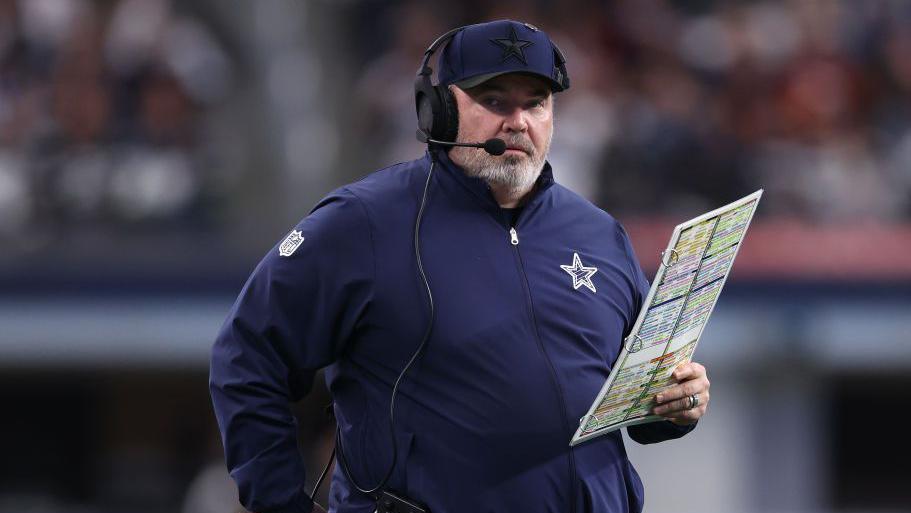
Mike McCarthy was the head coach in Green Bay from 2006-2018, covering 13 Draft cycles. During that entire time, he worked in conjunction with General Manager Ted Thompson. McCarthy was then the head coach in Dallas for five seasons from 2020-2024. Now, the Dallas drafts should be taken with a grain of salt because of how involved Jerry Jones is in every aspect of the Cowboys operation. In total McCarthy has been a part of 18 draft classes with 113 players drafted in Green Bay and 40 players drafted in Dallas. He has been a part of successful drafts – 20 of his picks in Green Bay and 8 of his picks in Dallas went on to make the Pro Bowl. He has done well finding talent at the top of the draft as 9 of his 18 first round picks have become Pro Bowlers.
Focus on the Trenches
One of the biggest takeaways from looking at McCarthy’s draft classes is his focus on the trenches. In 13 drafts with the Packers he made 12 first round picks. Green Bay traded out of the first round entirely in 2008 and 2017 while making two first round picks in 2009. Of those 12 picks, half were either defensive linemen or edge rushers. Clay Matthews was the best of the bunch, though Kenny Clark and BJ Raji would also be pro bowl nose tackles. Justin Harrell, Datone Jones, and Nick Perry all started less than 50 games. Four of the other six first rounders were used on defensive players. This included LB AJ Hawk, and defensive backs Jaire Alexander, Ha Ha Clinton Dix, and Damarious Randall. The two offensive players McCarthy picked in the first round while in Green Bay were both tackles – Bryan Bulaga and Derek Sherrod.
In Dallas, McCarthy did draft an offensive skill player in the first round, taking Oklahoma WR CeeDee Lamb who was a player Jerry Jones reportedly loved. His focus on the trenches was evident in his other four drafts as Dallas picked EDGE Micah Parsons, DT Mazi Smith, and offensive linemen Tyler Smith and Tyler Guyton. In total across 17 first round picks, McCarthy has used 12 on defense (8 of those on players in the trenches) and 4 on offensive linemen. CeeDee Lamb is the only outlier who may have been more of a Jerry Jones pick than a McCarthy pick. If you are one to follow the trends, there seems to be a strong indication that McCarthy likes to pick defensive players and focus on the trenches early.
Mid-Round O-Line Successes
Interestingly, for as many picks as McCarthy spent early in the draft on offensive linemen only one of them turned into a Pro Bowler (Tyler Smith, who moved from tackle to guard). However, McCarthy’s teams have been excellent at finding players in the middle rounds of the draft who blossomed into successful offensive linemen. Fourth round picks Josh Sitton, David Bakhtiari, and TJ Lang along with fifth rounder Corey Linsley were all Pro Bowlers in Green Bay. The trend continued in Dallas with 2020 fourth round center Tyler Biadasz making the Pro Bowl. In addition to the five Pro Bowlers, fourth rounders JC Tretter has 90 career starts and Allen Barbre has 40. Marshall Newhouse and Breno Giacomini were both fifth round picks who started over 80 career games. Some of this success has come from taking linemen from smaller schools in the mid rounds. Lang played at Eastern Michigan, Sitton at UCF, Tretter at Cornell, and Barbre at Missouri Southern State.
Day 2 Wide Receivers
Another area where McCarthy has excelled is in picking Wide Receivers on Day 2. For as much talk as we’ve had in the pre-draft process tying the Steelers to potential first round receivers, McCarthy has done yeoman’s work on the second day of the draft. In Green Bay he landed Greg Jennings (2006), Jordy Nelson (2008), Randall Cobb (2011), and Davante Adams (2014) in the second round along with James Jones (2007) and Ty Montgomery (2015) in the third. Incredibly, all of McCarthy’s Day 2 receiver picks were hits. In Dallas, the only Day 2 receiver that was selected was Jalen Tolbert in 2022. Tolbert hasn’t been the smashing success the six Packers receivers were, but he was a solid starter in 2024 before being plagued by injuries last year. Interestingly, none of these receivers came from schools that would traditionally be considered wide receiver powerhouses. Only Nelson (Kansas State), Cobb (Kentucky), and Montgomery (Stanford) came from power conference schools. Jennings (Western Michigan), Adams (Fresno State), Jones (San Jose State), and Tolbert (South Alabama) came from what would now be considered “Group of Five” schools. This trend of Day 2 receivers is an important one to note when considering the Steelers have four Day 2 picks (one 2nd rounder and three 3rd rounders).
Defense Early and Often – But Not Good
For being an offensive coach, it is likely a bit of a surprise that McCarthy used 12 of his 17 first round picks on defenders. That number gets even bigger when adding in the second round. Four of his five 2nd round picks in Dallas were defenders (two defensive backs and two edge rushers). On top of that, six of eight third rounders in Dallas were defenders. McCarthy and Jerry Jones used 12 of their 18 picks in the first two days of the draft on defense, only for the Cowboys to have one of the worst defenses in the league the last two seasons. That is a worrying trend for McCarthy’s abilities to scout defensive players.
The trend dates back to his Green Bay days as well. McCarthy used exactly half of his Day 2 picks (8 of 17 second rounders and 7 of 13 third rounders) on defense. However, of those players only CB Casey Hayward made a Pro Bowl. Among the 25 Day 2 defenders McCarthy drafted in Green Bay and Dallas, only four (Hayward, Morgan Burnett, Trevon Diggs, and Osa Odighizuwa) started more than 45 career games. That is a lot of picks for not much return. As good as McCarthy has been at drafting wide receivers on Day 2, he has been just as bad picking defensive players. His first rounders are likewise a mixed bag between hitting on Clay Matthews and Kenny Clark against busts like Justin Harrell and Datone Jones.
What about Quarterbacks?
McCarthy claims to be a quarterback developer, but his track record of drafting quarterbacks is terrible. He inherited franchise passers at every stop he has made. Green Bay had Brett Favre as the starter and had drafted Aaron Rodgers the year before McCarthy arrived. Now, to his credit, it was McCarthy who made the switch from Favre to Rodgers and he deserves accolades for Rodgers’ development. In Dallas, Dak Prescott was also the entrenched starter and signed to a long-term deal that essentially made him untradeable. Going back beyond his head coaching days, McCarthy was the offensive coordinator in San Francisco in 2005 when they chose Alex Smith first overall in the draft. Interestingly, McCarthy then moved on to Green Bay who had taken Aaron Rodgers 24th overall in the same draft class. In New Orleans, where McCarthy was offensive coordinator from 2000-2004, he made the switch to Aaron Brooks who was traded from Green Bay in 2000.
Given that McCarthy had established starters at his two head coaching stops, it is not a surprise he did not spend much draft capital on quarterbacks. It is also not surprising that none of the quarterbacks he drafted amounted to much. McCarthy picked 5 quarterbacks over his 18 draft classes. In Green Bay, he picked Brian Brohm in the 2nd round (the only one taken in the first two days) along with late round picks Brett Hundley, Ingle Martin, and Matt Flynn. Flynn had a flash in the pan half-season filling in for an injured Rodgers which catapulted him to a big free agent contract in Seattle. Hundley was a journeyman backup. In Dallas, McCarthy drafted Pittsburgh kid Ben DiNucci in the 7th round in 2020. Other than Hundley, Flynn, and DiNucci (once) being forced into duty because of injuries, Alex Smith’s 7 starts his rookie year are the only games McCarthy has started with a quarterback he drafted. This is also a concerning trend considering the Steelers need at the quarterback position.
Summary – The Good, The Bad, and the Ugly
Since 2006 there have been 571 drafted players that earned Pro Bowl selections, an average of 28.5 per draft class. Of the 4,718 players drafted in that time, that is a hit rate of 12.1% of draft picks becoming Pro Bowlers. McCarthy has been slightly above average with 28 of 153 draftees (18.3%) reaching at least one Pro Bowl. His biggest draft successes have come in picking Wide Receivers on Day two where he has not missed yet and with early Day 3 offensive linemen (in the 4th or 5th round). Most of these hits have come by going off the beaten path and taking players from Group of Five or non-traditional power conference schools.
On the flip side, McCarthy’s track record for drafting defenders on Day 2 is not good. He has certainly prioritized defense early and often in the Draft. Between Green Bay and Dallas McCarthy used 36 of 60 picks over the first two days on defensive players. However, not many of them turned into long-term starters. The ugliest part of McCarthy’s draft history is his quarterback selections. He has inherited starting quarterbacks at every stop since he became offensive coordinator of the Saints in 2000 (with the exception of Alex Smith’s rookie year). The need for a quarterback is the largest glaring hole in the Steelers lineup and the ability of the coach and scouting department to find a player that fits the mold of the offense will be crucial to developing long-term success.
Of course, the unknown in all of this analysis is how much involvement McCarthy had in the draft process. Mike Tomlin was heavily involved during his tenure. McCarthy, by contrast, has only been to one Pro Day this year. How much sway will his voice carry in the room on Draft night? Will this be Omar Khan and Andy Weidl’s vision for the Steelers that plays out? Given that McCarthy and Ted Thompson worked together for so long in Green Bay, it is likely there was collaboration on the selections. In Dallas, Jerry Jones has his fingers in everything and runs the ship, so it’s harder to point to the Cowboys selections as being purely “McCarthy’s guys.”